Thinking About Montessori or Progressive Education? Our Early Childhood Expert, Amy Webb, Shares Her Opinion on Both!
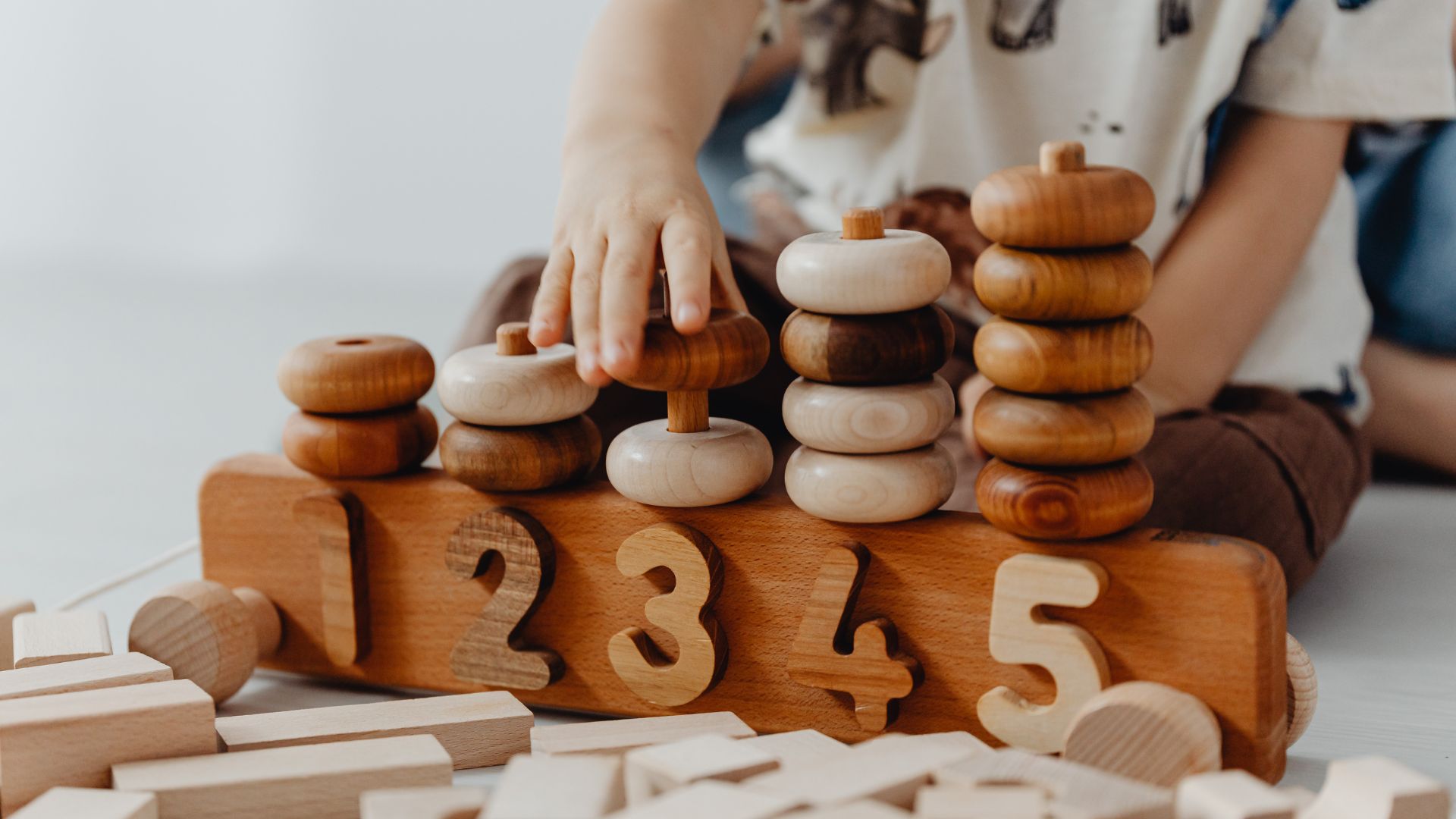
Parents who seek an early childhood setting that is a good fit for their youngster encounter settings that are “traditional,” “Reggio,” “Montessori,” and “progressive.” It can be a challenge to make sense of it all. I have heard parents use some of these terms interchangeably, particularly “Montessori” and “progressive.” These two approaches do have overlap, but there are some important, fundamental differences between them. Having worked as a teacher in both Montessori and progressive settings, I would like to shed some light on two key differences.
“Progressive” or “Constructivist” education was born in the early part of the twentieth century. Educators like John Dewey, Lucy Sprague Mitchell, and later, Lev Vygotsky and Jean Piaget contributed to its formation. The heart of the movement was toward a more democratic classroom, in which learners had a say in what they were learning, and their interests were prioritized. Vygotsky and Piaget’s addition was the idea of the student “constructing” knowledge rather than “receiving” it from an outside authority. Many of our recent trends in education are built on the Progressive Movement, including STEM/STEAM and tinker labs.
Montessori Education was created in a similar time by Dr. Maria Montessori, who improvised activities with limited resources in an Italian ghetto, with the goal of giving impoverished and school-less children a sense of purpose. Over time she developed materials and furniture that were scaled for young children, and many of these have been canonized among other qualities, for their ingenious, three-dimensional way of teaching abstract mathematical concepts. The Montessori “Practical Life” curriculum is well-loved and often borrowed in many early childhood classrooms for its support of children’s autonomy and fine motor development.
So what does this mean for the discerning parent deliberating how she wants to educate her child? Of course, each setting employs these philosophies slightly differently, but there are two fundamental differences to consider. The first is approach to play. In the typical Montessori classroom, there is no full-bodied pretend play. The Montessori classroom has real estate dedicated to language, math, sensorial (materials that engage children’s senses, and also include spatial learning,) practical life, art, books, and sometimes blocks. But there is no “Pretend” or “Dramatic Play” area with a kitchenette or dolls, or the open ended large blocks or cardboard boxes some classrooms provide for children’s projections of their ideas.
That doesn’t mean that children do not engage in the pretend/symbolic play that they need. In Montessori classrooms, it’s just on a smaller scale—for example, using the cubes of the pink tower to represent people or making a story using the pom-poms in Practical Life. I once observed a child carefully stack the pink tower cubes in size order on her meticulously laid out mat. She then retrieved a chair and a book from the book corner, so that she could sit and “read” her book to the tower, pausing to display the illustrations to the tower before turning each page. Her symbolic “teacher” play included the familiar lilting tones of a read-aloud. Pretend play in the Montessori classroom often looks like this—individualized, or enacted in dyads, using the small materials as symbols. In these settings, large body pretend play in groups is reserved for the gym, the playground, or the park.
In progressive settings, there is usually a dedicated Pretend or Dramatic Play area in the classroom, in which children engage in open-ended, unpredictable group pretend play during their “work time.” Teachers observe themes in children’s play and rotate the materials accordingly, or at a minimum provide materials that support curricular themes chosen by the teacher. Physical motor, social, linguistic, and cognitive skills are all being developed during this kind of play. The social engagement of small groups of children adds to the complexity of the learning.
The second difference I see is in the focus on individual vs. group processes. Of course, the culture of a classroom is dependent upon the teacher’s style, and his approaches to setting up the environment, supporting children’s engagement, and more. But in general, the Montessori classroom prioritizes an individual’s “work”—protecting a child’s workspace and using materials which, for the most part, invite individual engagement. And again, no group dramatic play area. This kind of classroom environment can look orderly and often quiet.
In the progressive classroom, with a teacher who is well-trained in constructivist approaches to curriculum, group processes are at the heart of the pedagogy. Learning together, from and with peers (and not always mediated through the authority of the teacher) is an essential ingredient in this approach to education. This is born out in group projects, in which children are prompted to use each other as resources and “experts,” to ask each other questions, and to struggle together to find the answers. Curriculum is dynamic, and teachers flexibly adapt the curriculum in response to children’s ideas and questions. This kind of classroom environment can occasionally look rambunctious and a bit loud.
Individual schools and classrooms within schools can vary on their success in this approach, and we’ve all seen a school whose practice falls far short of its professed philosophy. But these two key differences can serve as a useful lens for parents when learning about a school and thinking about what might best serve their own child’s learning. A parent of a child with developmental differences might consider the diminished sensory input (read, quiet) of the Montessori classroom, but also the benefit of more complex social engagement of the progressive classroom. There are so many wonderful early childhood settings, and the goal is always to find the right fit for you, and for your child.
For further reading:
Dewey, J. (1916): Democracy and Education
Montessori, M. (1949): The Absorbent Mind
Pratt, C. (1948): I Learn from Children
Vygotsky, L. (1978): Mind in Society
Wadsworth, B. (2003): Piaget’s Theory of Cognitive and Affective Development: Foundations of Constructivism
Amy Webb, M.S.Ed.